


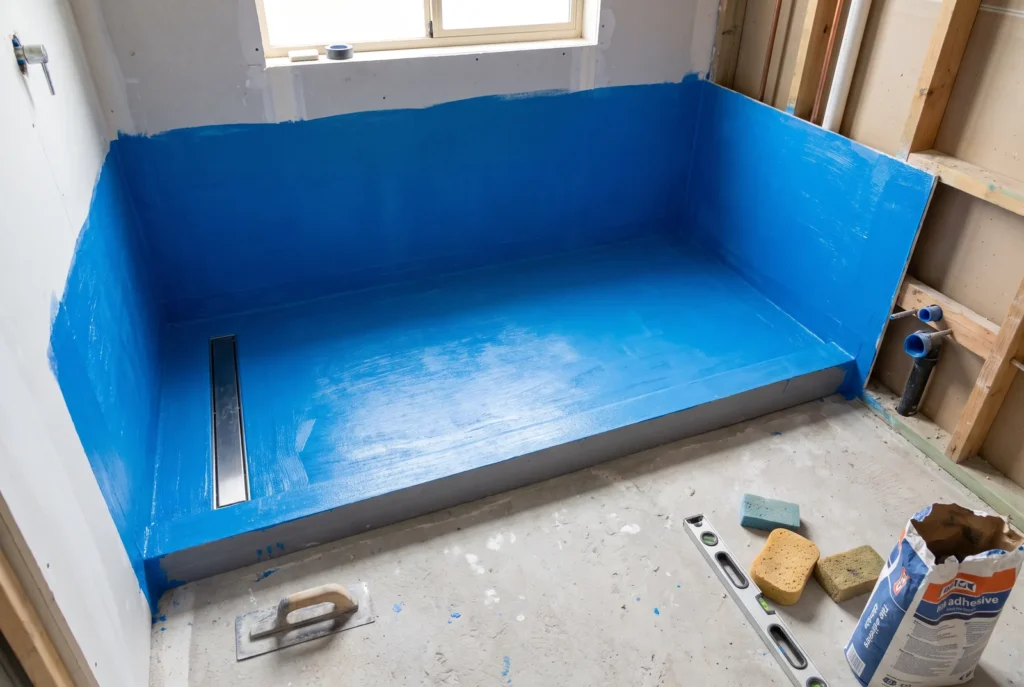
The walk-in shower is the number one dream of renovated bathrooms — and the number one source of claims when the waterproofing is botched. The golden rule: tiles are not waterproof; what is underneath them is. Technical summary.
The typical section (diagram)
The components that work
- Tile-ready tray (hard XPS foam with machined fall and integrated membrane): the modern, reliable, fast solution — it replaces the hand-built sloped screed.
- Waterproofing: liquid membrane (2 crossed coats) or bonded sheet membrane — floor + wall upstands, corners and penetrations treated with dedicated bands and sleeves.
- Drainage: Ø 50 low-profile floor drain (check the water seal ≥ 50 mm) or a linear channel along the wall; flow ≥ 24-30 L/min for a rain head. The pipe fall downstream: 1-3 cm/m (plumbing guide).
- Height: low-profile tray + tiles = allow for the recess from the screed stage — the point that decides whether the shower is truly level-access.
The 4 leaks-in-waiting
- Tiling straight onto plasterboard (even green) without a membrane: doomed mid-term — see boards in wet rooms.
- Insufficient fall (< 1 %): standing water, black joints.
- Floor mosaic with a strong fall: multiplies the joints, demands serious water-repellent grout.
- Silicone at the shower base instead of a sealing band: silicone is a finish, not waterproofing.