

Checking your wood floor before you lay it
What to inspect on delivery, which characteristics are normal on a natural material, and how to react if something is wrong with an order.
Lire le guide →
Practical guides to choosing, buying and laying wood flooring well: prices, grades, finishes, patterns — written by people who buy parquet at the factory all week long.
Calculator: how many m² should you order? →
What to inspect on delivery, which characteristics are normal on a natural material, and how to react if something is wrong with an order.
Lire le guide →
Mosaic, chequerboard, panels: the traditional parquet patterns, how they are laid, what they really cost and where they belong.
Lire le guide →
The first hours decide everything. Emergency steps, what can be saved, what must be replaced, and how to handle the insurance claim.
Lire le guide →
30 years, 50, a century? What really determines the lifespan of a wood floor: the wear layer, the finish and the upkeep — long before the price.
Lire le guide →
Comfort, upkeep, price, lifespan and resale value: an honest comparison between wood and tiles, room by room.
Lire le guide →
Very pale oak, wide boards, matt oiled finish: the concrete rules of the Scandinavian floor, and how to apply them without cliché.
Lire le guide →
Pale, natural, smoked or whitewashed: how the light in the room, the furniture and the upkeep should drive your choice of tone.
Lire le guide →
Perimeter gap, expansion breaks, doorways: where the wood must be free to move, and what happens when you stop it.
Lire le guide →
The flatness tolerances to meet before laying a wood floor, how to measure them with a 2 m rule, and when a levelling compound becomes unavoidable.
Lire le guide →
Creaks, loose boards, uncertain flatness: how to assess an old timber floor and lay a new one over it without surprises.
Lire le guide →
Yes, in most cases — provided the tiles are soundly bonded, flat enough and the height works. The full method, glued or floating.
Lire le guide →
Format, pattern, tone and durability: how to choose the floor of the most visible room in the house without misplacing the budget.
Lire le guide →
Comfort underfoot, acoustics, indoor air quality and budget: what actually matters in a bedroom, and what you can safely ignore.
Lire le guide →
10, 14, 15 or 20 mm: how overall thickness and wear layer decide the installation method, the lifespan and underfloor heating compatibility.
Lire le guide →
Direction, board width, tone and continuity: the choices that make a narrow space look bigger, and the ones that shrink it.
Lire le guide →
What the edge profile really changes: the look, how forgiving the installation is, and how the floor ages through the seasons.
Lire le guide →
Prime, Classic, Rustic, Heavy Rustic: what a grade really changes — knots, sapwood, budget — and why raw or brushed aged oak is often the smart choice.
Lire le guide →
Use class, reaction to fire, accessibility: the constraints that do not exist in a home and that decide the choice.
Lire le guide →
What a forest label actually guarantees, what the emissions rating measures, and the three questions to ask before you buy.
Lire le guide →
The gaps that open in January are not a defect in the floor, it is your air that is too dry. Understanding it, and fixing it.
Lire le guide →
Chevron, herringbone, wide planks: what is genuinely period, what is not, and the constraints of a century-old floor on joists.
Lire le guide →
When oak is too yellow or too expected. Three pale species, what they are worth in hardness, and what light does to them.
Lire le guide →
A tread is not a floor: it carries the load on its nosing and needs a specific part. What that changes in thickness, fitting and budget.
Lire le guide →
Three levels of damage, three different repairs. What can be sorted in ten minutes, and when the board really has to come out.
Lire le guide →
Doable, provided you know the three passes, the belt-sander trap and the real curing time before the furniture goes back.
Lire le guide →
The ranges by installation method and pattern, what makes a quote explode, and the items fitters charge on top.
Lire le guide →
Three products sold in the same aisle that have nothing in common. What each really is, what it costs, and what it becomes in ten years.
Lire le guide →
These are not finishes but surface treatments. What each changes to the touch, to upkeep, and to the way the floor ages.
Lire le guide →
What the building's rules can impose, what acoustic regulation says, and how to lay a floor without falling out with the neighbour below.
Lire le guide →
The expansion gap must stay free: that is the whole logic of perimeter details. Which skirting, which threshold, and the classic mistakes.
Lire le guide →
Light, room shape, subfloor: three rules that sometimes contradict each other. How to decide, and when you have no choice at all.
Lire le guide →
The lacquer protects the wood, but it wears. The cleaning that preserves it, the products that destroy it, and when it needs redoing.
Lire le guide →
Three checks decide. How to know whether an old floor can still be sanded, and when replacement becomes the more rational option.
Lire le guide →
What actually scratches a floor is neither the dog nor the heels. The real mechanisms of wear, and the choices that limit marks.
Lire le guide →
The most prestigious pattern in French flooring: what it really costs, the floor area it demands, and why installation changes everything.
Lire le guide →
An ammonia process that colours the wood through its thickness, not on the surface. What that changes for wear, scratches and renovation.
Lire le guide →
What to check before signing the delivery note, and the reservations to write if a pack is damaged. Five minutes that protect the order.
Lire le guide →
21, 23, 31, 33: what these codes actually mean, and why they matter less than you think for a wooden floor.
Lire le guide →
The number-one cause of floors that cup or open up. How long, under what conditions, and how to check it is ready.
Lire le guide →
Thickness, acoustic insulation, vapour barrier: what the printed figures really mean, and what matters in your situation.
Lire le guide →
Sound, comfort, reversibility, underfloor heating compatibility: the criteria that separate the three methods, without the received wisdom.
Lire le guide →
Floor area is never enough. The waste factor to allow for each laying pattern, and how to avoid a top-up batch that no longer matches.
Lire le guide →
Stains, impacts, leaks: the real risks, the finish that changes everything and the precautions that genuinely matter.
Lire le guide →
Yes, under five precise conditions. The board type, the finish, the ventilation and the installation that separate a beautiful floor from a claim.
Lire le guide →
A deep brown that lightens over time and a hardness below oak: the real characteristics of walnut, and the rooms where it excels.
Lire le guide →
Grain, colour, stability, price: what genuinely separates the two oaks, and which one suits your room and the look you are after.
Lire le guide →
Narrow, wide or extra-wide: the effect on how the room reads, on stability and on price. Simple rules by surface area and style.
Lire le guide →
Three ways to reach white, three very different results. How each ages, what it hides, and which suits your room.
Lire le guide →
Routine cleaning, how often to re-oil, products to avoid, and how to mend a marked patch without redoing the whole room.
Lire le guide →
2, 3 or 6 mm decides how many times a floor can be sanded and how long it lasts. The simple rule for not overpaying — or underbuying.
Lire le guide →
Suitable species, thicknesses and fitting methods, temperature limits, and the mistakes that make boards cup.
Lire le guide →
Substrate preparation, laying direction, expansion gaps, cuts: the full method and the mistakes that cost the most.
Lire le guide →
Who takes a margin between the mill and your home, what direct buying actually changes, and the trade-offs nobody mentions.
Lire le guide →
Look, resistance, upkeep, repairability: the criteria that actually decide, and the real cost of each finish over time.
Lire le guide →
Grade describes appearance, not quality. What knots, sapwood and colour variation each grade allows, and which one suits your room.
Lire le guide →
Two patterns constantly confused, and a third often lumped in with them. How to tell them apart, and what each one costs to lay.
Lire le guide →
Where the money actually goes, why the same board sells for double elsewhere, and the costs quoted prices leave out.
Lire le guide →
Stability, thickness, number of sandings, underfloor heating, budget: the criteria that genuinely separate the two families.
Lire le guide →Patterns, tones, moods: wood floors on the design side — choose with your eyes before the specs.
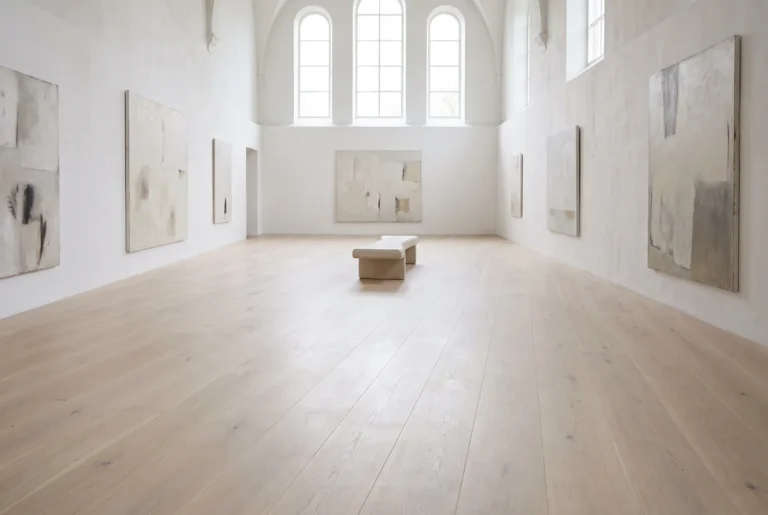
Invisible blond, very wide planks, the return of patterns, total matteness: what we see in projects — and what will last.
Read the article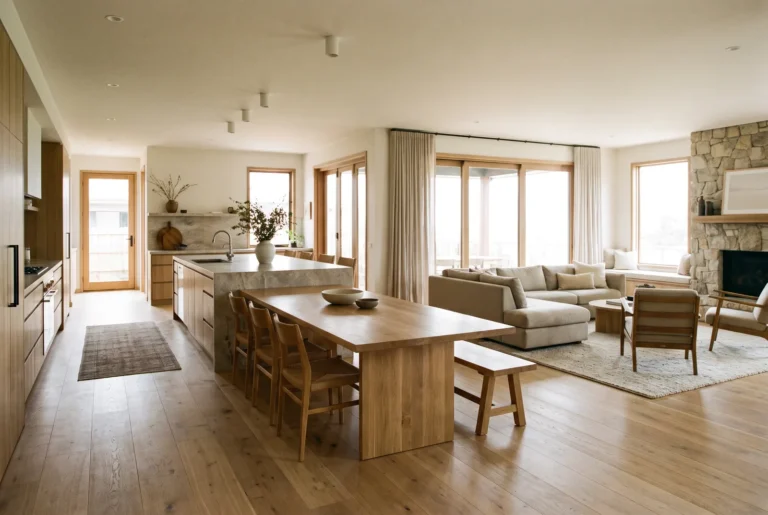
One house, three moods: the floor that suits the living room is not necessarily the bedroom's. A room-by-room tour.
Read the article
The floor is a third of what the eye sees in a room. It had better play on the same team as the rest — the style-by-style guide.
Read the article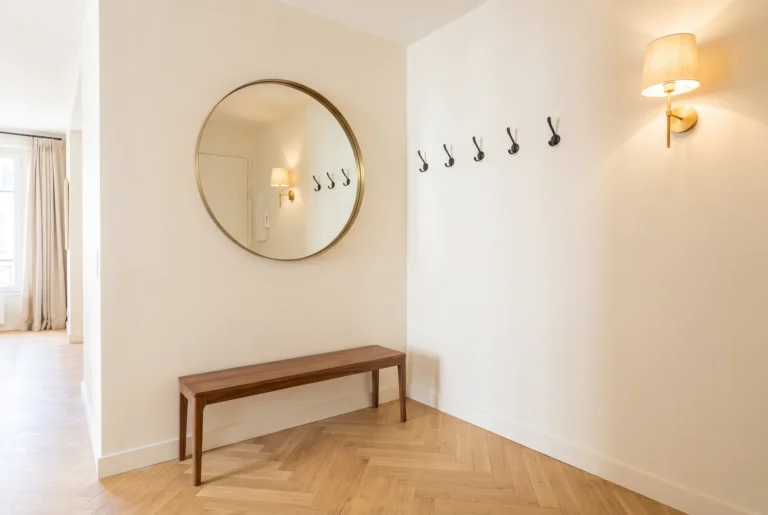
It is the most trodden and least considered room in the house. A few good decisions and the entrance becomes a real room.
Read the article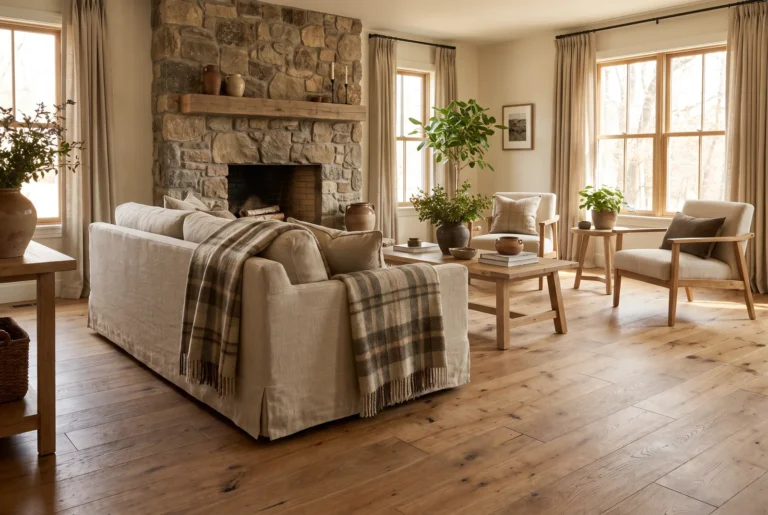
Frank knots, hand-planed surfaces, total matteness: why the sharpest interiors are returning to wood that looks like wood.
Read the article
Dark floors scare people — wrongly. Well dosed, they are the surest tool for an enveloping, warm, slightly hotel-bar room.
Read the article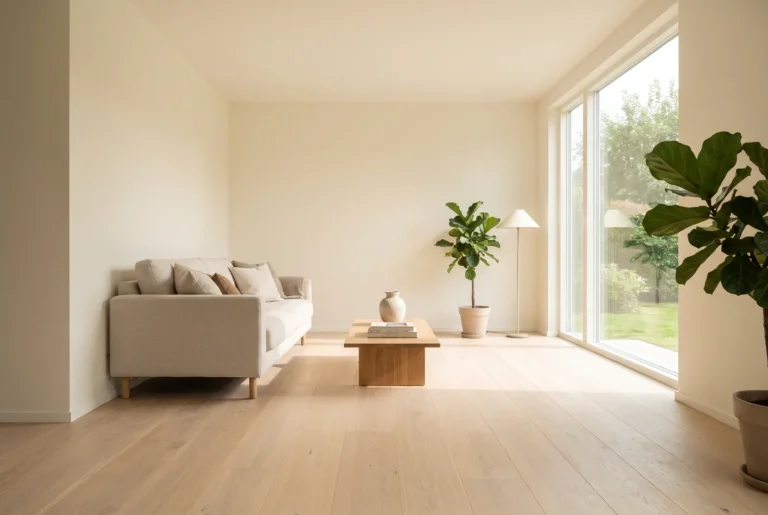
People think a small living room calls for small boards. It is the opposite: fewer joints, more calm — the room breathes.
Read the article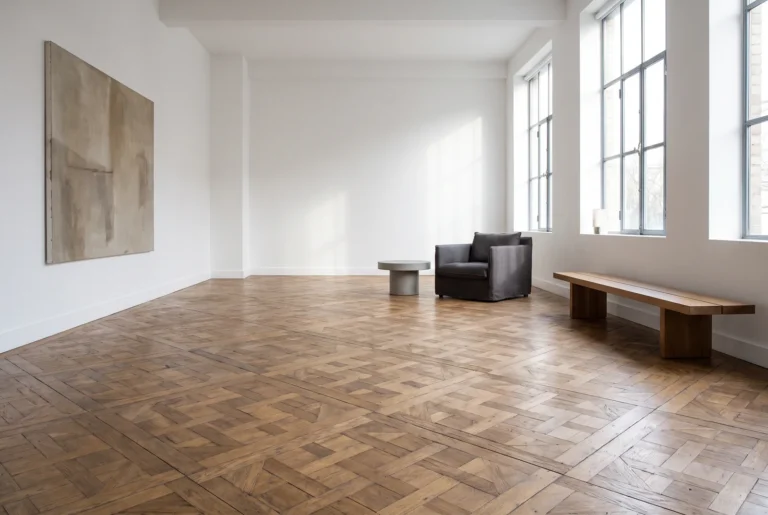
Four centuries after the Hall of Mirrors, the French panel finds its place again — in interiors that look nothing like a château.
Read the article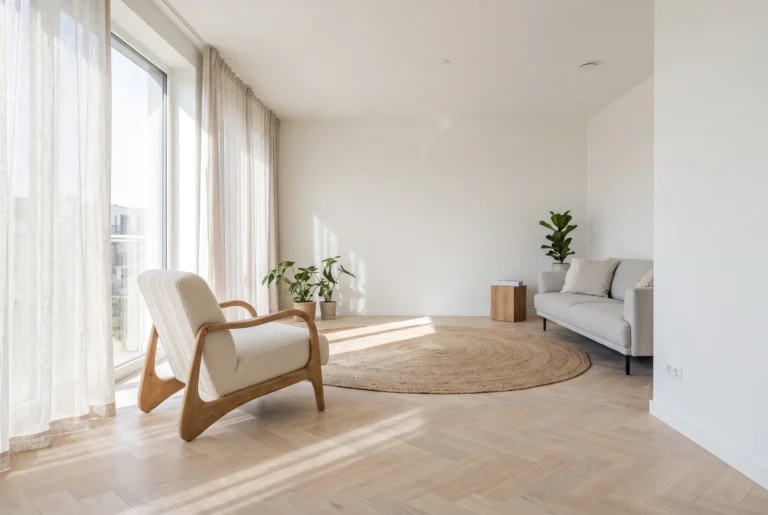
Less solemn than chevron, more alive than a straight plank: herringbone is the perfect compromise for today's interiors.
Read the article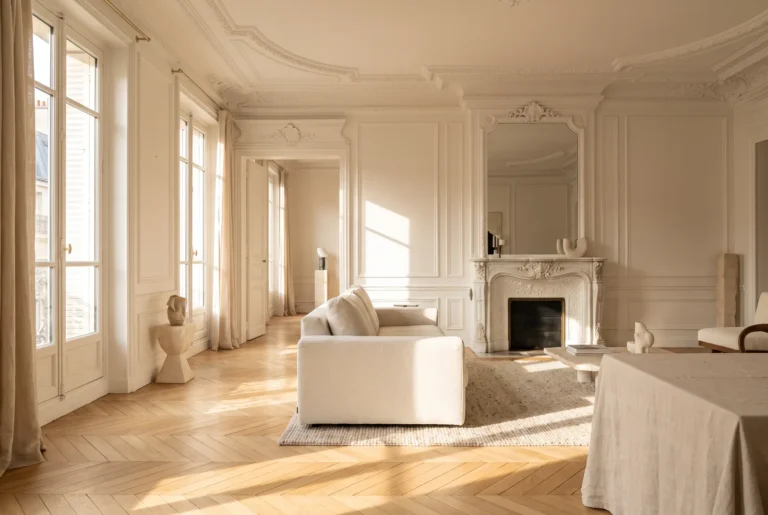
The floor of Parisian apartments moves into contemporary interiors — why it fascinates, how to choose it, what to pair it with.
Read the articleDrywall, insulation, electrics, plumbing, floor preparation: everything that comes before the wood floor.

Double-buttering by format, spacers, cuts, grout: a straight wall of tiles — and what the rules require.
Read the guide
30 % of heat losses go through the roof: blown wool, minimum R for subsidies, vapour barrier and detail points, summarised.
Read the guide
Fill, skim, smooth, sand: the method to turn a tired wall into a new substrate without lining it with plasterboard.
Read the guide
Mandatory primer, matt/eggshell/satin finishes, drying conditions: the method for a flawless paint job on new boards.
Read the guide
Hollow-wall metal anchor, toggle, through-reinforcement: real capacities per fixing type and the thresholds not to exceed.
Read the guide
Green moisture-resistant board, waterproofing under tiles, exposure classes: what the rules require around a shower or bathtub.
Read the guide
Insulated panel + board bonded with adhesive mortar: the method, dabs every 30 cm, and the cases where bonding is forbidden.
Read the guide
Hangers every 1.20 m, channels every 60 cm, boards screwed across: the rules of a suspended ceiling that never cracks.
Read the guide
Standard grey, green moisture-resistant, blue acoustic, high-impact: the table to pick the right board for each room and use.
Read the guide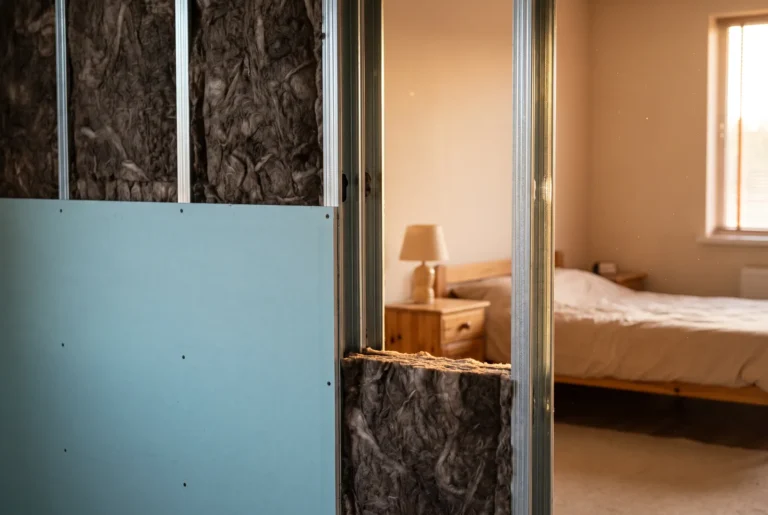
Airborne or impact noise? Mass-spring-mass walls, floating floors, suspended ceilings: what really works to get silence back.
Read the guide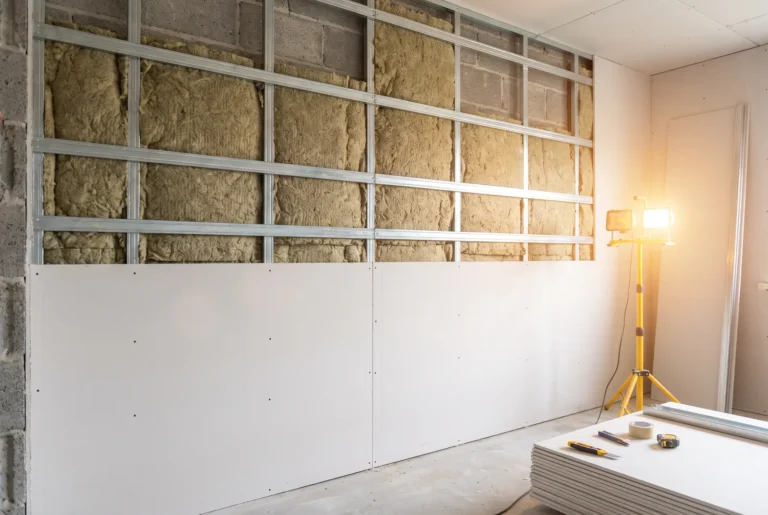
Bonded insulated board or metal-frame lining: both techniques compared, the thicknesses that matter and the moisture traps.
Read the guide
Paper or metal-reinforced tape, compound in 3 passes, sanding: the plasterers' technique for perfectly flat walls before painting.
Read the guide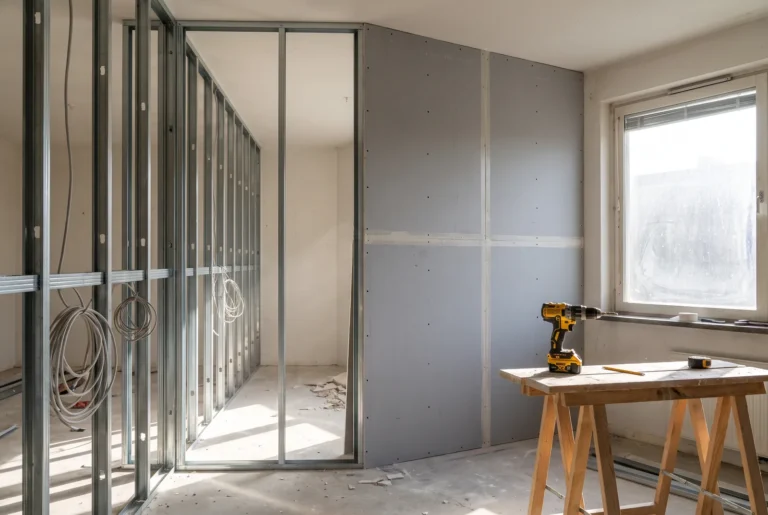
Tracks, studs, screw spacing, board layout: the complete method for building a straight, solid plasterboard partition, even for a first-timer.
Read the guide
Lumens per m², colour temperature, CRI, spots and dimmers: designing a renovation lighting plan, with figures.
Read the guide
Watts per m³ by insulation level, delta T, position under the window, bleeding and balancing: sizing radiators right in renovation.
Read the guide
Humidity-controlled systems, heat-recovery units: regulatory airflows, vents, ducts and the mistakes that make ventilation noisy or useless.
Read the guide
Safety valve group, dedicated 20 A circuit, off-peak contactor, fixing: the summary for a compliant cylinder installation.
Read the guide
Maximum depths, forbidden zones, flexible conduits, refilling: how to bury the electrics without weakening the walls.
Read the guide
Living room, bedroom, kitchen, outdoors: the number of sockets and lighting points required by the French standard, and mounting heights.
Read the guide
30 mA RCDs, rows, busbars, 20 % spare capacity: how a compliant electrical board is composed.
Read the guide
Three materials, three philosophies: costs, durability, ease of installation and use cases for redoing supply and waste without mistakes.
Read the guide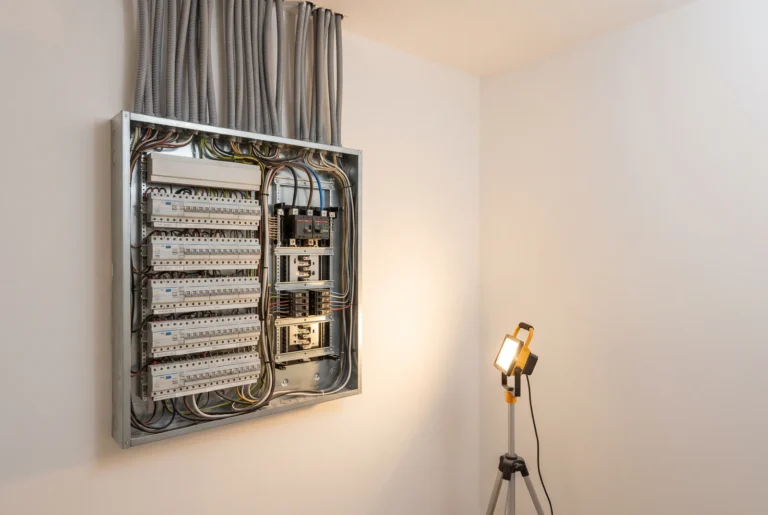
Consumer unit, sockets per room, dedicated circuits, bathroom zones: the essentials of the NF C 15-100 standard for planning a compliant renovation.
Read the guide
Pedestals, joists every 40-50 cm, stainless screws, 1-2 % fall, air gap: building a deck that lasts.
Read the guide
Double-buttering from 1,100 cm², movement joints, levelling clips: glued floor tiling by the book.
Read the guide
Tile-ready tray, liquid membrane, 1-2 % fall, linear drain: the rules for a level-access shower that never leaks.
Read the guide
Fibre-reinforced compound, primer, refixing screws, decoupling mat: fixing an old moving floor without ripping it out.
Read the guide
Carbide meter, 3 % and 0.5 % thresholds, where to sample: the protocol that saves a wood floor from a damp substrate.
Read the guide
Insulation, PEX pipes at 10-20 cm spacing, embedding screed, gradual first heat-up: the steps before laying the floor covering.
Read the guide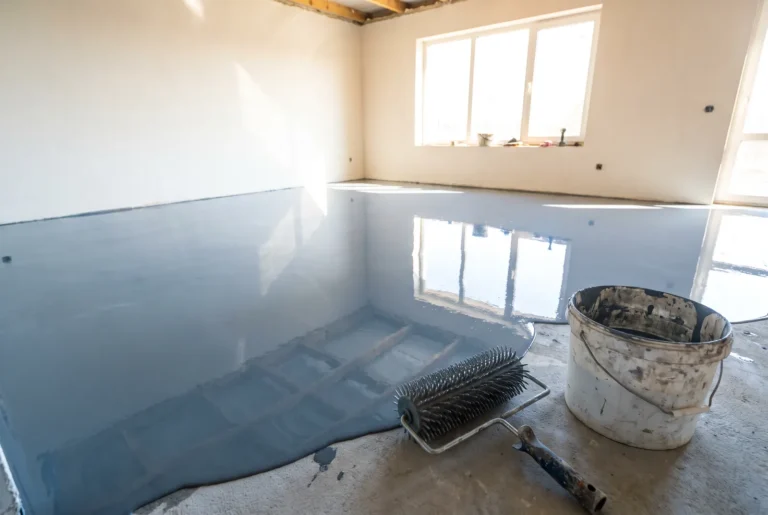
Under 2 cm: self-levelling compound. Beyond: screed. How to measure, choose the right product and prepare a truly flat floor before wood or tile.
Read the guide
Blondel formula, creaks, sanding, sealing or cladding the steps: making a staircase new again without replacing it.
Read the guide
Uw, Sw, full-frame removal vs retrofit installation, PVC/alu/wood: choosing joinery and avoiding the shrinking-glass trap.
Read the guide
Handover report, reserved defects, 5 % retention, 1-, 2- and 10-year guarantees: your rights after the works, summarised.
Read the guide
What you can do freely, what needs the managing agent or the general meeting, working hours and floor rules: renovating without conflict.
Read the guide
Refresh, full renovation, heavy renovation: prices per m² by level and the typical budget split by trade.
Read the guide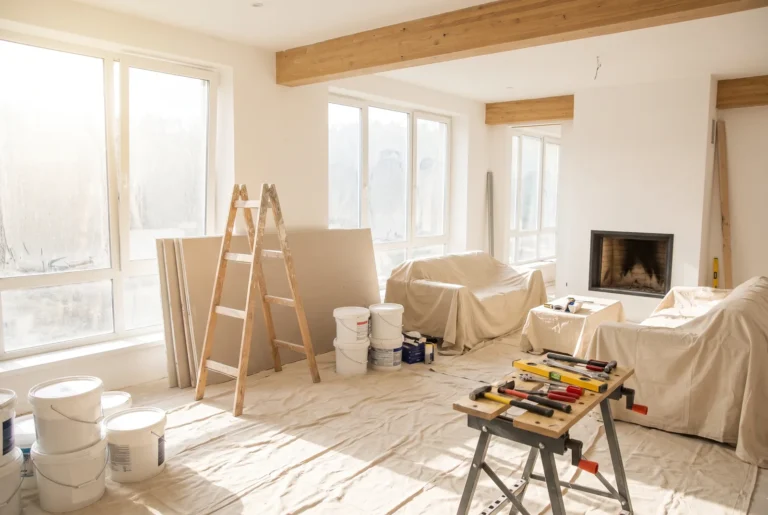
Demolition, services, plasterboard, screed, painting, floors: the standard schedule of a full renovation — and why the wood floor comes last.
Read the guide